

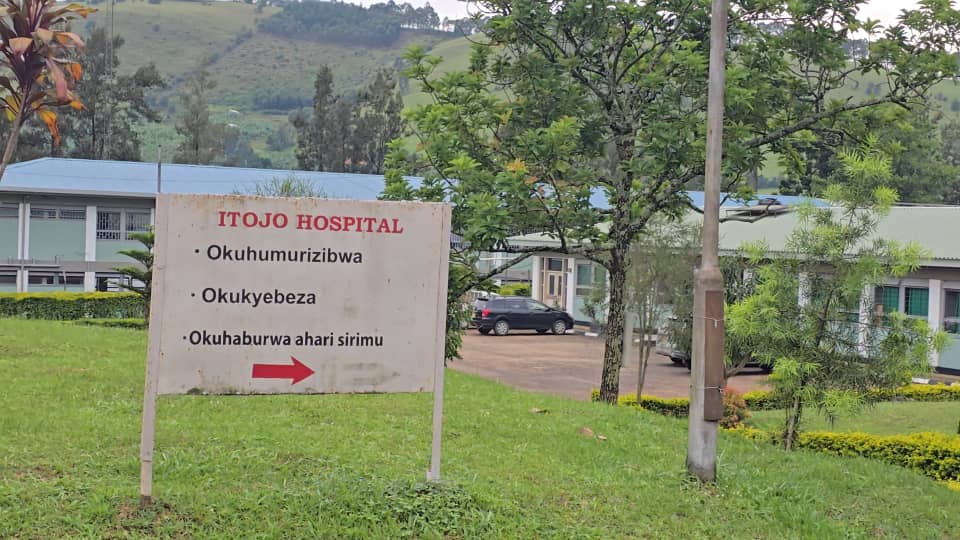
Along the Mbarara–Ntungamo–Kabale highway in Itojo Sub-county, Ntungamo District, Itojo General Hospital stands as a visibly upgraded health facility with renovated wards, improved structures and ongoing works, but is increasingly coming under pressure from rising patient numbers and persistent staffing shortages.
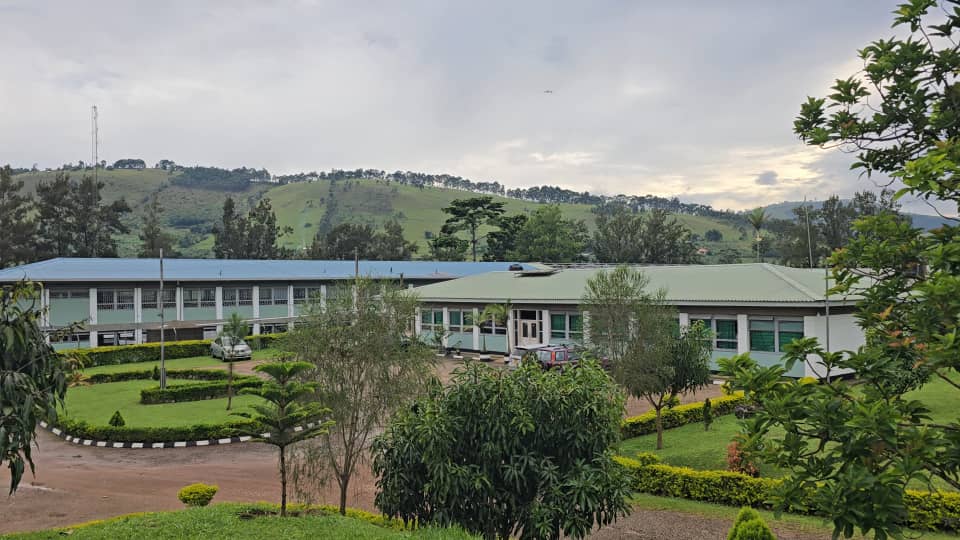
Established in the 1960s under the leadership of Milton Obote and commissioned in 1971 during Idi Amin’s rule, the hospital today presents a modernised appearance, with light greenish-blue and white buildings stretching across a mix of single, double and three-storey blocks.
The facility retains its post-independence architectural character, now blended with ongoing renovations by the UPDF Engineering Brigade.
Hospital administrator Ham Owatuhire said the original structures remain unique but noted the need for further expansion.
“This structure we have are very unique. They were constructed by people who were patriotic by that time,” he said.
However, leaders at the facility say the current layout is no longer sufficient for the growing patient load, with calls for expansion of key service areas such as wards, theatres, laboratories and the mortuary.
“The standards are very fine but we need to increase spacing especially of wards, theatre, laboratory, and mortuary,” said Denis Savimbi, Itojo Sub-county councillor.
Inside the hospital, pressure is most visible in the maternity ward, where high admissions have stretched bed capacity and forced some mothers to share limited space, including sleeping on the floor at peak times.
“In the 1990s the deliveries were not many like now. Now we have many referrals due to client satisfaction despite shortage of workers. Many mothers come for antenatal and deliveries. Some mothers can even sleep on the floor because they are very many,” said Tabitha Tasiima, senior nursing officer at Itojo General Hospital.
Tasiima, who has worked at the hospital since the 1990s, said increased health education and outreach programmes have contributed to higher facility-based deliveries, reflecting changing community health-seeking behaviour.
“We go for outreaches and give health education about disadvantages of native medicine,” she said.
The hospital now handles more than 700 deliveries quarterly and serves a catchment population of over 15,000 people, with outpatient attendance exceeding 68,000 visits in the previous quarter.
Despite expanded services including HIV testing and counselling, nutrition support, laboratory, X-ray, dental, mental health, and neonatal care, officials say the system remains overstretched due to staffing gaps and infrastructure limitations.
Amon Bahati, a health official in Ntungamo District, said staffing levels remain far below required standards.
“The staffing levels currently stands at 28 percent compared to 38 percent recommended by the Ministry of Health particularly using this approved new structure,” he said.
The hospital also continues to grapple with unstable electricity supply, relying on a high-consumption backup generator commonly referred to as “Benz”, which consumes about 20 litres of fuel per hour, further straining operational costs.
“We have an old model generator called Benz which consumes a lot of fuel because per hour it consumes twenty litres,” Owatuhire said.
Despite these challenges, Itojo General Hospital has become a key health facility for Ntungamo and surrounding districts, supported by modern additions such as ultrasound and X-ray services, as well as strengthened maternal and paediatric care that have reduced referrals to distant hospitals.
Amos Bahati, a district official, said the hospital is serving an expanding referral catchment but requires urgent upgrading.
“We have five Health Centre IVs that refer to Itojo General Hospital and we also get influx of patients who come for care. We pray the government gives us funding and upgrade this hospital to a referral hospital,” he said.
With rising demand and limited resources, Itojo General Hospital now stands at a critical point, structurally improved but increasingly stretched, underscoring the need for additional staffing, expanded infrastructure and elevation to a higher referral status.
